Home › Commercial Brick Veneer Systems
We install commercial brick veneer systems in Scottsdale, AZ for modern building envelopes. Our team works with anchored and panelized veneers to deliver the look of full brick over structural framing. We coordinate detailing around windows, corners, and control joints for a weather resistant, attractive facade.
Superior Masonry Scottsdale provides professional commercial brick veneer throughout Scottsdale, AZ, Arizona and the surrounding area. Our licensed, insured crew delivers safe, clean, on-time work with a free estimate before anything begins. Call (623) 288-3988 or request your free quote.
Commercial Brick Veneer Systems Built for Scottsdale Properties
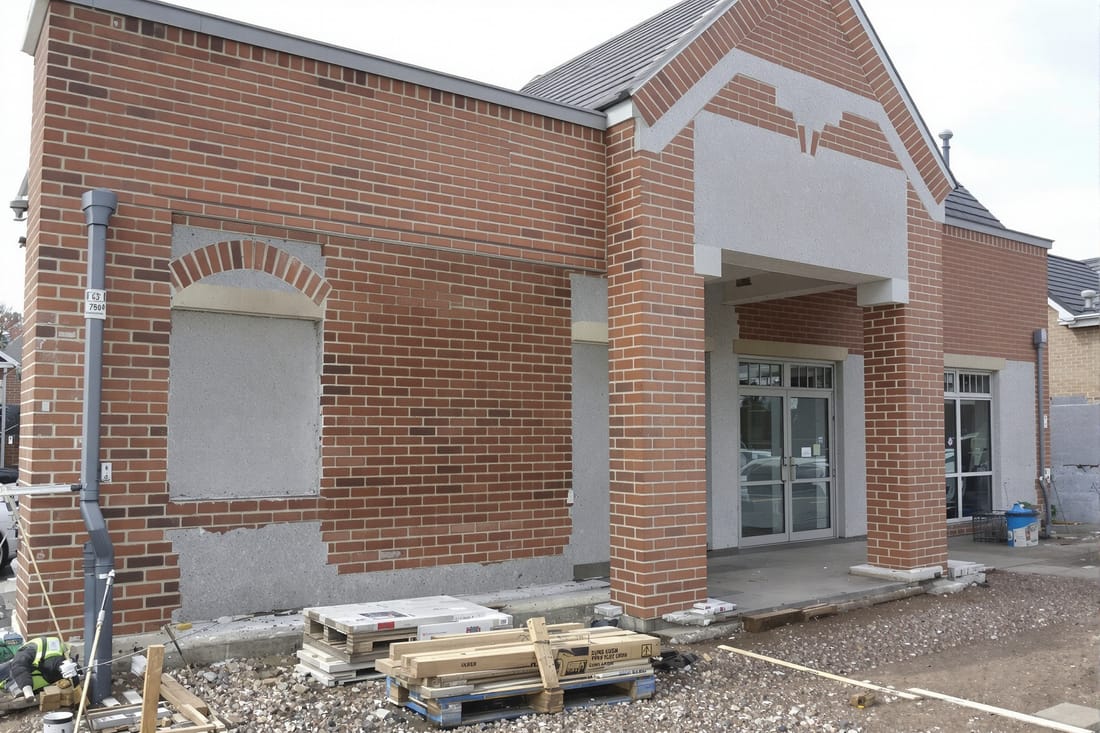
Commercial brick veneer gives Scottsdale buildings the look and feel of full brick masonry without the structural weight and cost. At Superior Masonry Scottsdale, we design, engineer, and install brick veneer systems that hold up in Arizona heat, handle building movement, and meet local commercial codes.
In practical terms, a commercial brick veneer system is a non-structural brick facing that is anchored to a backup wall, often concrete masonry units (CMU), structural steel framing with sheathing, or poured concrete. The veneer is usually a single wythe (one brick thick) with a designed air space and a drainage system. Done correctly, the system sheds water, allows the wall to dry out, and keeps the veneer stable during temperature swings and minor building movement.
Our focus is on commercial projects in Scottsdale and nearby cities where long-term durability, consistent appearance, and code compliance matter more than shortcuts. We coordinate with architects, general contractors, and owners so the veneer layout, color, and joint profiles match the design intent while still being practical to build in our climate.
How We Plan and Engineer Your Brick Veneer System
A reliable commercial brick veneer starts with planning and engineering, not just laying brick. Superior Masonry Scottsdale begins with a site review and a full set of drawings. We look at the structural backup wall type, building height, exposure to sun and wind, and drainage details before proposing a veneer system.
For most commercial projects, we recommend a drained and ventilated cavity. That means we plan an air gap behind the veneer, weep vents at the base of the wall, and properly lapped flashing at key locations. Our team verifies anchoring requirements based on building height and wind exposure. On taller structures along major corridors like Scottsdale Road or near open desert, wind loads are higher, so we increase anchor density or upgrade to heavier gauge systems as needed.
We coordinate expansion and control joints with the design team. Scottsdale’s temperature swings, especially between hot afternoons and cooler nights, cause masonry to expand and contract. Without properly spaced joints, veneers crack at random points. We work joint locations into the brick pattern at corners, long runs, and around openings so the joints are functional but visually minimized.
Before construction starts, we prepare sample panels when requested. This allows owners and architects to see exact brick units, mortar color, joint profile, and bond pattern in the Arizona sun rather than relying only on catalog photos or indoor samples.
Installation Steps on a Scottsdale Commercial Project
On site, a commercial brick veneer system follows a clear sequence. First, we verify the backup wall is plumb, structurally sound, and ready to receive anchors or ties. Gaps, misaligned CMU, or out-of-tolerance framing are corrected before veneer work starts. This avoids crooked lines and uneven joints later.
Next, we install the moisture management components. This typically includes through-wall flashing at shelf angles, at the base of walls, and above window and door openings. We add end dams at terminations and corners so water is directed out at the weeps instead of behind the wall. We use appropriate flashing materials for Scottsdale’s UV exposure so they do not become brittle in a few summers.
We then install brick ties or anchors on a prescribed grid, tied into studs, CMU, or concrete as specified. For steel-stud backup walls, we make sure fasteners hit framing members, not just sheathing. The air space behind the veneer is maintained with consistent spacers or careful layout to prevent mortar droppings from clogging the cavity.
Once the substrate and anchoring are confirmed, we begin brick installation. We follow the specified bond pattern, maintain consistent bed and head joint thickness, and keep coursing aligned with key elements like window heads, sill lines, and control joints. Mortar is mixed to the right workability for Arizona’s dry air, and we pay attention to retempering times so strength is not compromised.
As the wall goes up, our crew cleans mortar smears from the veneer face before they harden fully, using minimal water to prevent staining or efflorescence. Final cleaning is scheduled for early morning or cooler hours to avoid rapid drying that can leave streaks.
Brick, Mortar, and Detail Options for Commercial Veneer
Superior Masonry Scottsdale works with a wide range of brick manufacturers so your commercial brick veneer can match an existing building or stand out on its own. Common choices include modular and king-size clay brick, thin brick with a compatible support system, or concrete brick units for specific color ranges. For retail centers and office buildings, we often combine smooth face units at upper levels with textured or tumbled brick at pedestrian level to add character.
Mortar selection matters in Arizona’s climate. We help you choose the appropriate mortar type based on structural needs and exposure. Lighter mortar colors will highlight the joint pattern and can make a façade look brighter in Scottsdale’s strong sun. Darker mortar tends to conceal joints and read as a more uniform surface. We also discuss joint profiles, such as concave, V, or struck joints. Concave joints typically shed water best and perform well in local dust and driving rain events.
Detailing at openings and transitions is where many veneer systems fail if not planned correctly. We pay particular attention to window heads and sills, where flashing must be continuous and integrated with window systems. At grade, we design the base of wall to keep the veneer above soil or landscape irrigation spray to avoid long-term staining and premature deterioration. For mixed-material facades, we coordinate transitions between brick veneer and stucco, metal panels, or stone, so movement joints and flashings align.
If you are renovating or expanding an existing Scottsdale property, we can analyze existing brick and mortar, source the closest available match, and adjust bond patterns and tooling to blend old and new work. This is especially relevant for campuses or retail centers built in phases over several years.
Cost Drivers, Scheduling, and Common Issues in Scottsdale
Commercial brick veneer costs are influenced by several concrete factors. Brick type and size, specialty shapes such as corners or sills, and color consistency requirements all impact material cost. Taller buildings or complex façade articulation, such as deep recesses and projections, increase labor time and the amount of scaffolding or mast climbers needed.
Site access around Scottsdale commercial properties is another driver. Working along active streets or tight lot lines can require more staging, night or off-hour work, or specialized equipment. We review access early so you know if these conditions will affect your budget or schedule.
Weather is a real concern in Arizona. While brickwork can be performed almost year-round, summer heat and monsoon storms require adjustments. In peak summer, we adjust work hours and mortar mix water content to avoid premature drying, which can weaken joints. During monsoon season, we watch forecasts and protect partially completed walls from sudden wind-driven rain that can wash out fresh joints or stain the face of the brick.
Common problems we help prevent include clogged weep holes, missing or misplaced flashing, and inadequate anchors. These are usually the result of rushed or unsupervised work. Superior Masonry Scottsdale uses checklists at each elevation so cavity spaces remain open, weeps stay clear, and anchors are installed at the specified spacing and embedment. On existing buildings with issues such as bulging veneer or efflorescence, we can perform exploratory openings to identify whether the problem is poor anchoring, trapped moisture, or both, then propose targeted repairs instead of guesswork.
Why Work With Superior Masonry Scottsdale for Commercial Brick Veneer
Commercial brick veneer systems are long-term building investments, not short-term finishes. When installed correctly, they can last for decades with minimal maintenance. When installed poorly, they can trap water, crack, or separate from the structure. Superior Masonry Scottsdale focuses on getting the concealed details right so the visible brickwork stays sound.
We are experienced in coordinating with Scottsdale inspectors and understand local interpretations of the building code as it relates to anchored masonry veneer, seismic and wind requirements, and energy code considerations for wall assemblies. Our teams are used to working within active commercial sites, including retail centers that must remain open, office buildings under renovation, and new ground-up construction.
For property owners and general contractors, we provide clear proposals that spell out brick type, anchor system, cavity depth, flashing locations, and cleaning methods. During the job, we maintain communication about schedule, material deliveries, and any field adjustments required by as-built conditions.
If you are planning a new commercial building or updating an existing property in Scottsdale, AZ, we can review your plans and provide practical recommendations on brick veneer details that will perform better in this climate. Superior Masonry Scottsdale is available to assist from early design input through final punch list to ensure the veneer system performs as intended for the life of the building.